Prayer spaces
12 Prayer Room Ideas for a Peaceful Space at Home
Practical prayer room ideas for turning a spare corner, bedroom, or living space into a place you will return to.

A prayer room does not have to be a whole room. It can be a chair beside the bed, a cleared shelf in the living room, or the quiet end of a hallway. The purpose is simple: make it easier to pause, open Scripture, and pray without first having to decide where to go or what to gather.
These prayer room ideas are for real homes. Some work when you have a spare room. Others work when your home is busy, small, shared, or still in motion. Begin with the idea that removes the most friction from your day. The room can grow later, but the habit needs an honest place to start now.
1. Begin with the chair you already use
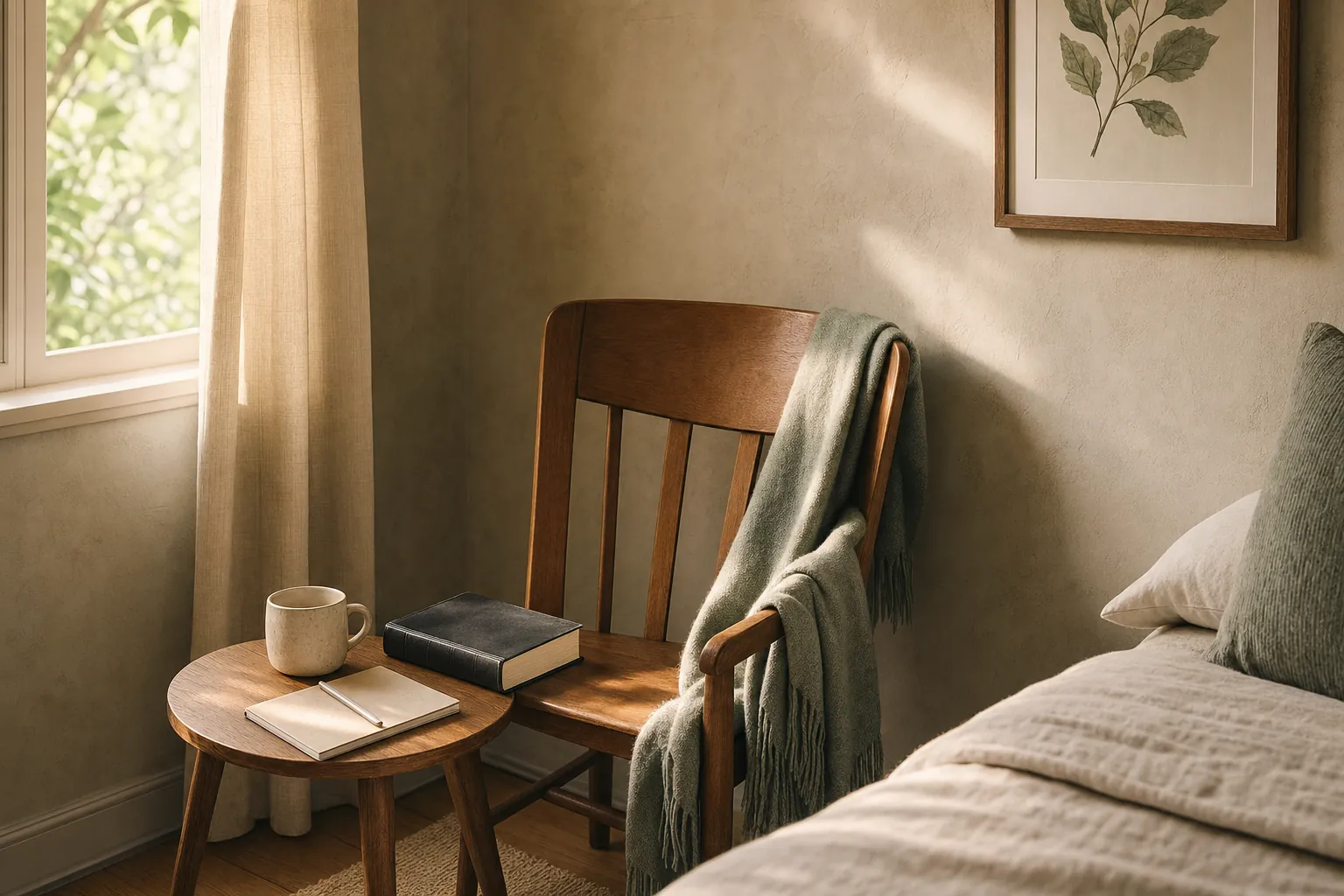
Look for a seat that already helps your body settle. It may be the chair by the window, the end of the sofa, or a bedroom chair that is usually empty. A familiar seat lowers the barrier to beginning because you do not need to rearrange a room every time you want a quiet moment. You are simply returning to a place you already know.
Give that chair one nearby surface, even if it is a small stool. Keep the things you reach for most often there: a Bible, journal, pen, reading glasses, or short prayer list. The space should feel ready without looking staged. If it becomes a display you are afraid to disturb, take a few things away. A useful prayer space is allowed to look lived in.
Pay attention to what happens when you sit down. If you immediately reach for your phone, leave it across the room before you begin. If the chair faces a loud part of the house, turn it slightly toward a wall, window, or lamp. Tiny changes can help your attention land. You do not need perfect silence, only enough room to become present.
2. Let a window make a small corner feel distinct
A window is not required, but natural light can help a prayer corner feel separate from the rest of the room. A familiar view gives your eyes somewhere gentle to rest before you open a book or begin to pray. In the morning, the changing light can become a quiet cue that the day has begun. In the evening, drawing the curtains can signal that the day is ready to be set down.
Choose a window because it fits your life, not because it photographs well. A private bedroom window may suit an early morning rhythm. A living room window may work better when everyone else is asleep. If the view is distracting, turn the chair inward and keep the window nearby for light rather than as the center of attention.
Sheer curtains, a small lamp, or a plant can soften a corner without turning it into a decorating project. The goal is simply to give the space a different feel from the places where you rush, work, or clean. Even a few feet of visual distance can make it easier to slow down.

3. Make a bedside prayer space
A bedside table is one of the most practical prayer room ideas because it works with a rhythm many people already have. Keep a Bible or devotional there, along with a notebook that is easy to open when you are tired. A warm bedside lamp is often kinder on the eyes than an overhead light and can make a few minutes of reading feel more welcoming.
Keep the setup light. A crowded table can become another thing to manage, especially at the end of the day. One book, one notebook, and one pen may be enough. If you need more privacy, use a small drawer or a lidded box for prayer notes. The point is not to create a perfectly styled bedside table. It is to make a gentle invitation that is still there when the house is quiet.
Evening can be a good time to pray when mornings are full. Read a short Psalm, name one thing you are grateful for, and bring one concern before God. The invitation in Philippians 4:6-7 gives you somewhere to bring the day as it actually was, not as you wish it had been.
4. Use a basket when your space has to disappear
Not every home can keep a prayer corner visible. A basket can hold the practice together without asking the room to stay the same. Choose one that is easy to carry and store close to the chair, bed, or sofa where you usually pray. Inside, keep only the items that make prayer easier to begin.
A Bible, notebook, pen, devotional, and a small card with names or needs can all live together. When it is time to pray, bring the basket to your seat. When the room needs to return to family life, put it away. There is nothing less meaningful about a space that folds back into the day. Consistency comes from reaching for the same few tools, not from leaving them on display.
This approach also works well for people who move often, share a room, or have children who use every available surface. A portable prayer space can travel from a bedroom to the living room, then back into a closet when needed. What matters is that you can find what you need without a search.
5. Keep one clear surface for what matters
A tiny table or shelf is enough to make a prayer space feel usable. The helpful part is not the furniture itself. It is knowing that the next thing you need has a place. You do not have to search for a pen, clear mail, or move yesterday's dishes before you begin.
Try a simple reset at the end of each prayer time. Close the journal, return the pen, and leave the surface ready for tomorrow. This takes less than a minute and protects the corner from slowly becoming storage. Clear does not mean perfectly decorated. It simply means the space is not asking you to do another chore before you can pray.
If a surface naturally collects clutter, give it a defined boundary. A small tray can hold the Bible and journal. A box can hold private notes. A basket under the table can keep a blanket or reading plan close by. These simple homes reduce the little delays that turn five available minutes into none at all.

6. Choose one verse for the season you are in
A visible verse can give a prayer space a steady center. Choose one that meets the season you are actually carrying: peace when your mind is loud, courage when you feel uncertain, comfort when someone you love is hurting, or hope when you need a reason to keep going. The invitation to be still in Psalm 46:10 is a gentle place to begin when the room and the day both feel full.
Selah's Scripture Art collection is made for this kind of personal space. A piece such as Light of Peace, Still Waters, or Path of Hope can be printed in a size that suits the room and framed in a way that feels like home. The image is not there to make prayer more impressive. It is there to keep a true word in view.
Let the verse become a companion rather than background decoration. Read it when you sit down. Notice which words stay with you during the day. When the passage is familiar, it can help the corner feel less like a separate task and more like a steady part of the home.
7. Add comfort before decoration
Comfort is practical, not indulgent. A chair that makes you shift after two minutes, harsh light, or a cold corner can quietly discourage a habit before it begins. A throw, a small lamp, or a pillow can make it easier to stay present long enough to read, listen, or sit quietly.
Start with what you already own. You do not need a special chair or a coordinated collection. Pay attention to the details that change whether you actually want to sit down. If you keep avoiding the corner, change one thing about the comfort before deciding that the idea did not work.
It can be helpful to make the corner feel different from a work chair or a place where you answer messages. That may be as simple as a soft lamp, a folded blanket, or a small rug under the chair. The shift is not about creating a luxury space. It is about giving your body a cue that it can stop bracing for the next demand.
8. Put the phone out of reach
For many people, the phone is the quickest way for a prayer time to become a scroll. You do not need to make a dramatic rule, but it helps to decide where the phone goes before you sit down. Leave it charging across the room, place it in a drawer, or use a basket that stays outside the prayer corner.
If you use a Bible app or a guided prayer, turn on a focus mode first and place the device face down when you are finished reading. The goal is not to prove discipline. It is to give your attention a chance to settle. Jesus' example of going to a quiet place to pray in Mark 1:35 is a useful reminder that making room often means stepping away from other demands for a moment.
When the phone is out of reach, do not be surprised if your mind still jumps around at first. Keep a blank page nearby. If you remember a task, write it down and return to the passage or prayer in front of you. This is not failure. It is a practical way of telling your mind that the task has been noticed and can wait.
9. Create a small place for names and needs
A prayer list can keep prayer from becoming vague when you are tired or distracted. It does not need to be a perfect journal. A small card, a page in a notebook, or a jar with folded names can give you a simple starting point when words are hard to find.
Keep the list private if the corner is in a shared room. A closed notebook or lidded box is enough. Add names, worries, and moments of gratitude as they come to mind. Over time, returning to the same list may help you notice prayers that have changed and people you have continued to carry.
You might divide one page into three small areas: people, places, and personal concerns. Or you might keep only a running list of names. There is no superior system. The useful system is the one you can open without feeling behind. Prayer notes are there to serve honesty, not become another measure of productivity.
10. Make room for Scripture, not just your to-do list
A prayer room can hold concerns, but it also helps to arrive with something to listen to. Keep a bookmark in a Gospel, a Psalm, or a short reading plan so you are not choosing from the whole Bible every day. Reading one small passage twice is often more useful than racing through several chapters when your attention is thin.
Try a short pattern: read a passage, notice one word or phrase, then respond in your own words. The Lord's Prayer in Matthew 6:9-13 is a steady guide when you are not sure how to begin. It makes room for worship, need, forgiveness, and trust without asking for a polished performance.
When you have only a few minutes, choose depth over variety. Read the same short passage all week. Let it speak into different days. A familiar passage can become easier to carry with you once you stand up and return to the rest of the house.
11. Use the evening when morning is not realistic
Morning prayer is often pictured as the ideal, but it is not the only faithful time. For some homes, the quieter window comes after dinner, once children are asleep, or just before bed. An evening prayer space can help you put down the day instead of carrying every unfinished thing into sleep.
Use softer light and keep the first practice brief. Read a few verses, name one thing you are thankful for, and bring one burden honestly before God. The encouragement in 1 Thessalonians 5:17 is an invitation to keep returning, not a demand to create a flawless routine.
Consider leaving an unlit candle, a small lamp, or a favorite blanket in the corner as a cue for the evening rhythm. You do not need to use every item every night. The point is to make the next right step obvious when your energy is low.

12. Let the space stay flexible
The best prayer room idea is the one you will use in the life you have now. A corner may move when a baby needs the room, when you move apartments, or when a new work schedule changes your day. That is not failure. A prayer space is a support for the practice, not a test of your ability to keep a room unchanged.
Try a setup for one week, then notice what gets in the way. Maybe you need a better lamp, a smaller basket, a more comfortable chair, or a different time of day. Make one adjustment at a time. Small, honest changes are more likely to build a rhythm than an ambitious redesign you cannot maintain.
Give yourself permission to start over whenever the season changes. The practice can travel with you from a spare room to a bedside table, from a quiet morning to five minutes after dinner. The room serves the return. It does not need to be permanent to be meaningful.
A practical prayer room setup checklist
Before you add another item to the room, check the basics. Can you sit there comfortably for ten minutes? Is there enough light to read without straining? Can you put your hands on a Bible, journal, and pen without searching? Is there a simple plan for your phone and for any private notes? If those answers are yes, your space is already doing its main job.
Next, think about the room at the actual time you expect to use it. A corner that feels peaceful at noon may be too dim at night. A living room may be quiet before everyone wakes and busy after dinner. Sit there for a few minutes at your likely time of prayer. This small test is more useful than trying to predict everything from a photo or shopping list.
Then remove one distraction. It might be visual clutter, a pile of laundry, the television remote, a work laptop, or a phone charger. You do not have to make the room empty. You are simply deciding what should not be the first thing competing for your attention. When the space is modest and clear, it becomes easier to arrive as you are.
Finally, decide on the first action you will take every time you sit down. You might open to the bookmarked passage, write the date in your journal, or read one verse aloud. A familiar first step matters because it keeps the room from asking you to invent a whole routine each time. Once you begin, you can stay longer or keep it brief without the practice feeling incomplete.
Do not worry about finding the ideal version of every item. A borrowed lamp, an ordinary notebook, and a chair from another room can make a faithful beginning. Spend your effort on ease of use first. If the space becomes part of your life, you will learn what deserves a more permanent place.
When the prayer space feels hard to use
If you make a corner and do not use it right away, resist the urge to judge the whole idea. The space may be fine, while the time of day, level of privacy, or expectations need adjusting. Try moving the practice to a different hour before changing the furniture. A few quiet minutes after lunch may fit your current season better than an ambitious plan for dawn.
It also helps to make the first version smaller. Instead of expecting a long devotional time, sit down for one Psalm and one honest sentence of prayer. The prayer does not become less meaningful because it is short. Small beginnings teach the room what it is for, and they give you something to return to when life is crowded.
Some days, you may only manage to sit quietly with an open Bible. That is still a real use of the space. The point is not to perform calmness or complete a checklist. The point is to come back. The promise of God's presence in Psalm 23 can be a steady companion when you need rest more than the right words.
When the room begins to feel stale, change one small detail. Move the chair, switch the lamp on earlier, refresh the verse in view, or bring in a different blanket. A prayer space does not need a complete makeover to feel welcoming again. It only needs to keep helping you take the next quiet step.
A simple way to begin tonight
Pick one seat, gather one book and one notebook, and set a timer for five minutes. Read a short passage, say what is true about the day, and sit quietly before you leave. That is a complete beginning. You can add a side table, artwork, or a dedicated room later, but you do not have to wait for the finished version to make room for prayer.
For the first week, use the same small routine at roughly the same time. Keep the bar low enough that you can return even on a busy day. At the end of the week, ask one practical question: what made it easier to sit down, and what kept getting in the way? Let the answer guide one small change. A prayer space becomes personal through use, not through getting every detail right before you begin.
When you are ready to make the space feel more settled, browse Selah's room inspiration, choose a verse from the Scripture Art gallery, and use the print guide to bring the artwork home in a size that fits your corner.
Frequently asked questions
What should be in a prayer room?
Start with a place to sit, a Bible, and one surface for the items you use most. A journal, pen, lamp, or prayer list can help, but the room does not need much. Choose only what makes it easier for you to return.
How do I make a prayer space in a small home?
Use a chair, bedside table, shelf, or basket that can be stored nearby. Keep your Bible and journal together so you can set up quickly. A small prayer space works when it fits your routine, not when it takes up a certain amount of room.
Does a prayer room need to look a certain way?
No. A prayer space can be plain or beautifully layered. Comfort, privacy, and ease of use matter more than decoration. Let the room support your attention instead of giving you another project to maintain.
What is a simple prayer routine for home?
Begin with five minutes. Read a short passage, notice one phrase that stands out, and respond honestly. You can give thanks, ask for help, pray for another person, or sit quietly. Keeping the first routine small makes it easier to return tomorrow.