Prayer spaces
How to Make a Prayer Corner at Home
Create a simple place for prayer and reflection, even when you only have a small corner to spare.
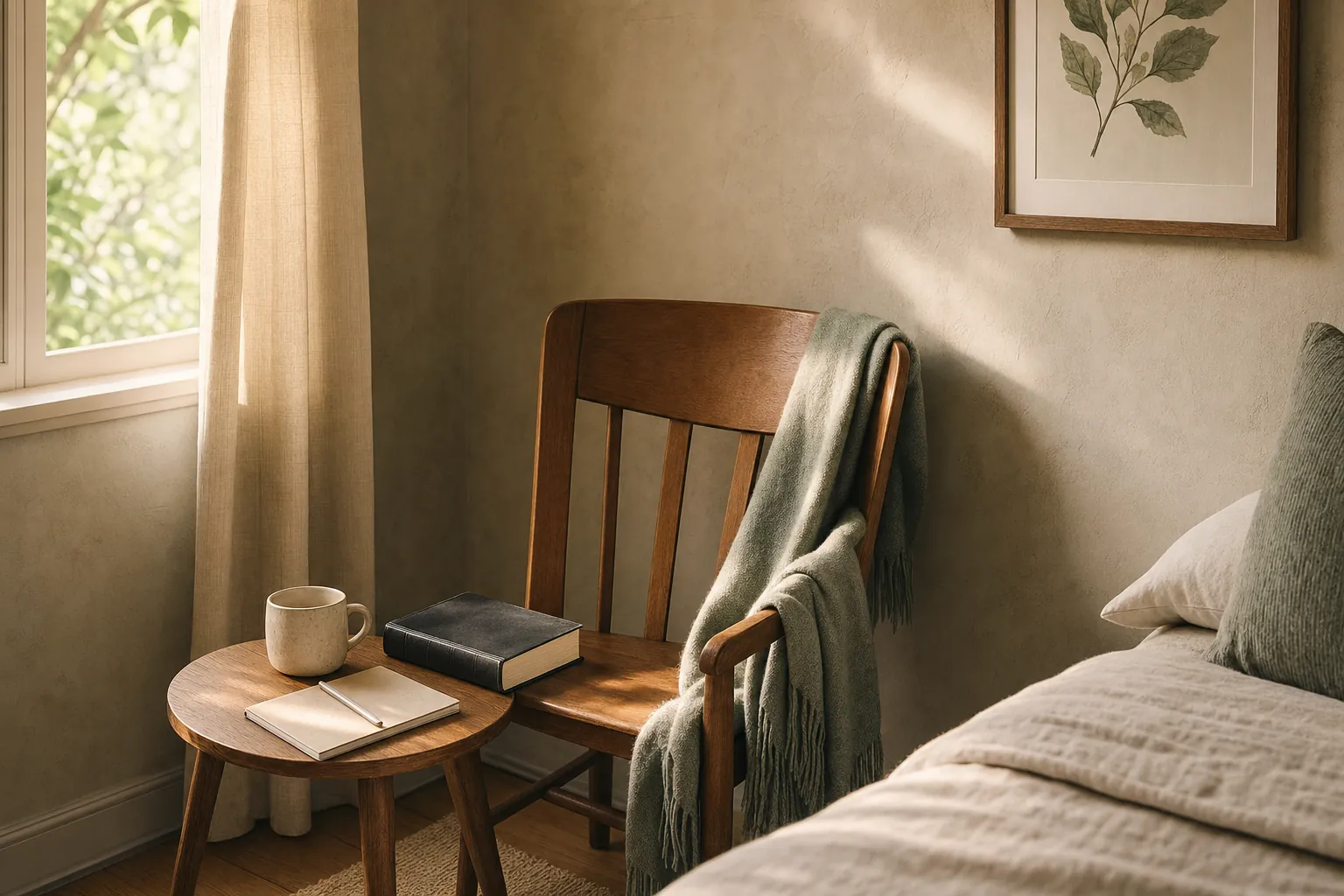
A prayer corner is not a room you have to earn. It can be a chair near the window, one end of the sofa, a bedside table, or a small spot you clear when the day begins. What makes it useful is not the size or the styling. It is the quiet signal it gives you: this is where I come back to God.
Jesus spoke about making space for private prayer in Matthew 6:6, and the Gospels also show Him seeking a quiet place to pray in Mark 1:35. A corner at home can serve that same purpose in a very ordinary way. It gives your attention somewhere to land when life feels scattered.
Start with a place you can return to
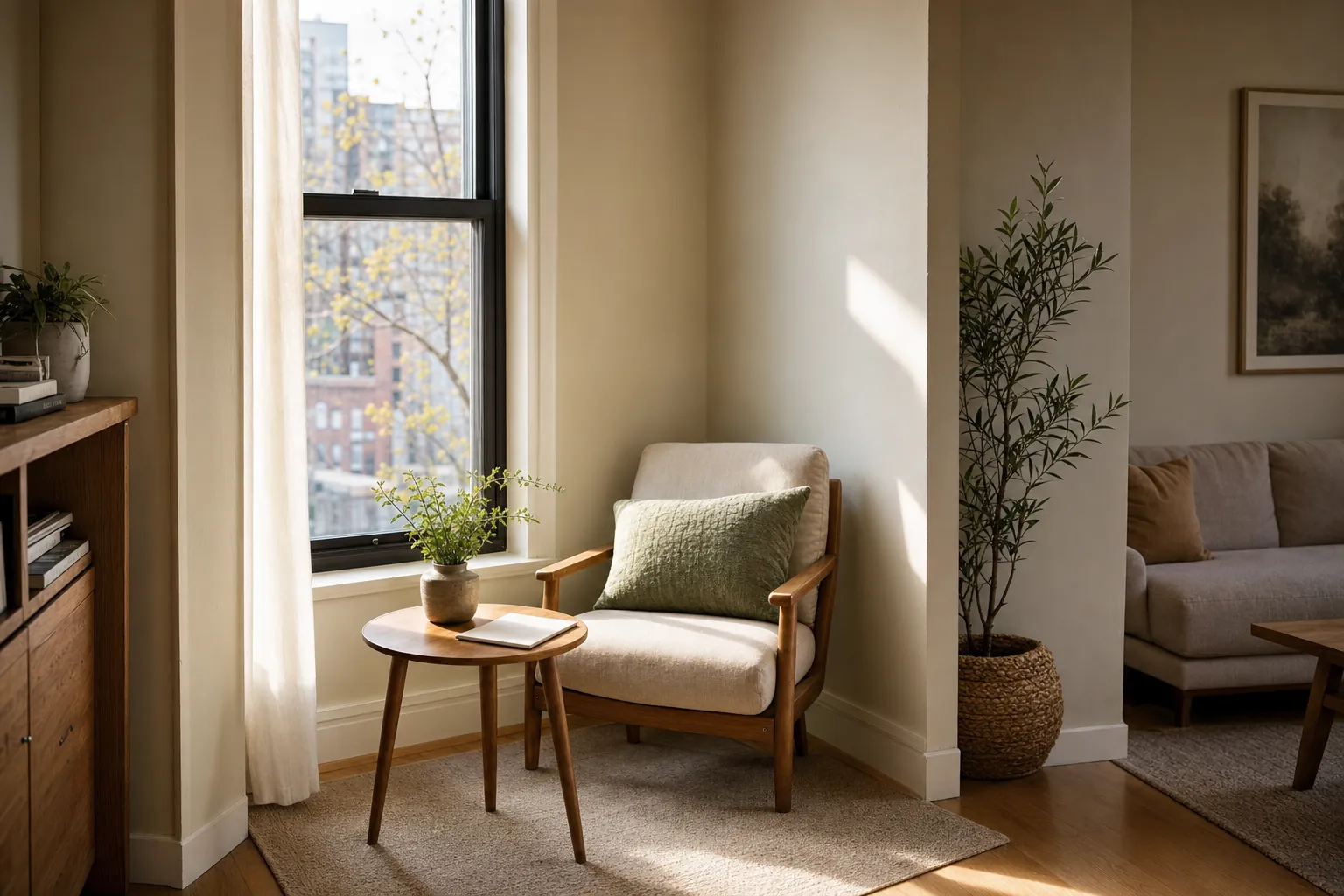
The best prayer corner is usually the one that fits your real routine. Choose a spot you already pass in the morning or evening, rather than a room that stays closed most of the day. A bedroom corner can work well when your house is busy. A chair in the living room may be better if you naturally wake early or settle there after dinner. If you live with other people, look for a place where you can have a few minutes without being in the center of activity.
Pay attention to comfort and repeatability. You do not need perfect silence, but you do need a place where your body can settle. A chair with a throw, a small stool by a window, or a corner beside a bookshelf is enough. The goal is not to build a display. It is to make prayer easier to begin.
Before you move anything, spend a day noticing your home. Where does the light feel gentlest? Which seat already helps you slow down? Where do you tend to set down your phone at the end of the day? A prayer corner is more likely to become part of your life when it grows from a place you already use. The extra bedroom is not automatically better than the chair you sit in every morning. Choose the spot with the fewest barriers between you and a quiet moment.
It also helps to make an honest decision about interruption. A corner beside the kitchen may be convenient, but it can be difficult to stay present while everyone is making breakfast. A bedroom may be more private, but it may also tempt you to lie down. There is no perfect answer. Pick the tradeoff you can live with, then adjust after a week. A prayer corner can move. It is there to serve the practice, not become another rule to manage.
Keep the setup simple enough to use
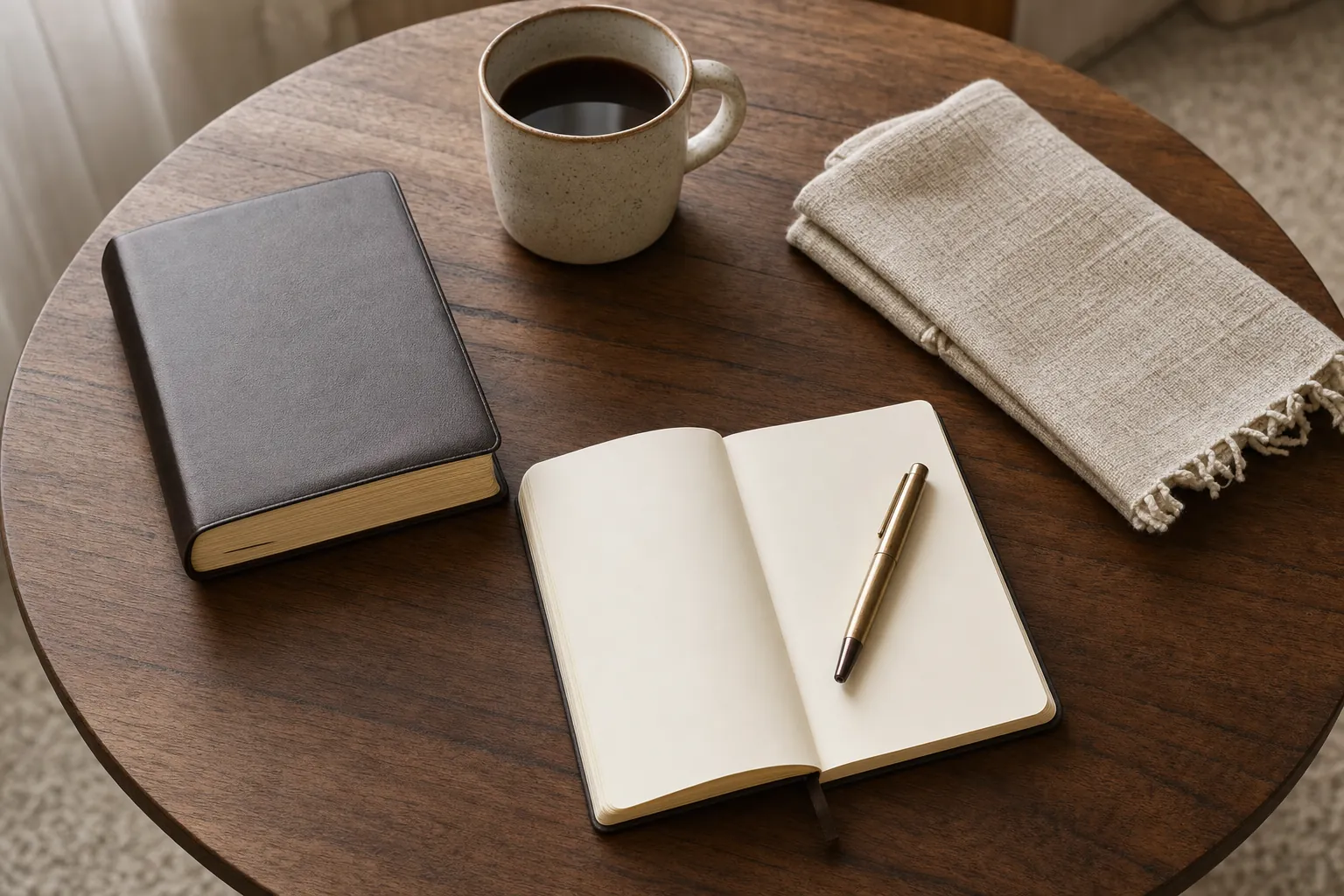
Start with the few things that help you stay present. For many people, that is a Bible, a journal, and a pen. You may also want a small basket for prayer cards, a bookmark for a reading plan, or a cup of tea for an early-morning habit. The point is not to collect more objects. It is to remove the small frictions that make you put off the time you wanted to take.
A useful test is this: would you know what to do when you sit down? If the answer is yes, the corner is doing its job. You can read a passage, write a few lines, sit quietly, pray for someone by name, or bring the day honestly before God. If the area begins to gather laundry, mail, or unrelated clutter, take two minutes to reset it. A clear surface is not a spiritual requirement, but it can make it easier to focus.
Give every item a simple home. A basket can hold a journal and devotional book. A small tray can keep a pen from wandering off. A drawer or lidded box can keep private prayer notes out of view when the corner is in a shared room. These are small practical choices, but they matter because they make it easier to begin without a search. When the items you need are already together, a five-minute pause can stay a five-minute pause.
Be careful not to turn the setup into a project that keeps expanding. You do not need special furniture, an expensive chair, or a perfectly coordinated collection. Start with one surface and one place to sit. Add something only when it helps you use the space. If you find yourself arranging instead of praying, clear a few things away. Simplicity leaves room for the reason you made the corner in the first place.
Make the corner feel personal, not precious
Your prayer space should support honesty, not performance. Choose colors, materials, and objects that help you exhale. That might mean a soft blanket, a favorite chair, a plant, or a family photograph nearby. It can be very plain. It can also be beautiful. Neither choice makes the prayer more valid.
Think about what usually pulls you away. If your phone takes over the moment, leave it across the room or place it face down in a drawer before you sit. If your mind races, keep a small notepad handy so you can write down the task and let it go. If you need a starting point, keep a short prayer or a familiar Psalm within reach. The space should work with the way you actually live, not ask you to become a different person before you can use it.
Comfort is worth taking seriously here. If a chair makes you fidget after three minutes, you will probably avoid it. If a corner is always cold, add a throw. If the light is harsh at night, use a lamp that feels soft enough for reading. These are not decorative extras. They help create a place where you can stay a little longer when you need to. Small adjustments can make a regular habit feel less like another demand on your time.
Some people prefer a space that feels almost empty. Others feel helped by a few reminders of the people and situations they are carrying. Both are valid. You might keep a card with names to pray for, a notebook with answered prayers, or a photograph that reminds you of someone you love. Keep what brings you back to God, and remove what makes the corner feel busy or performative. Your space can be quiet without being impersonal.
Let Scripture give the space its tone
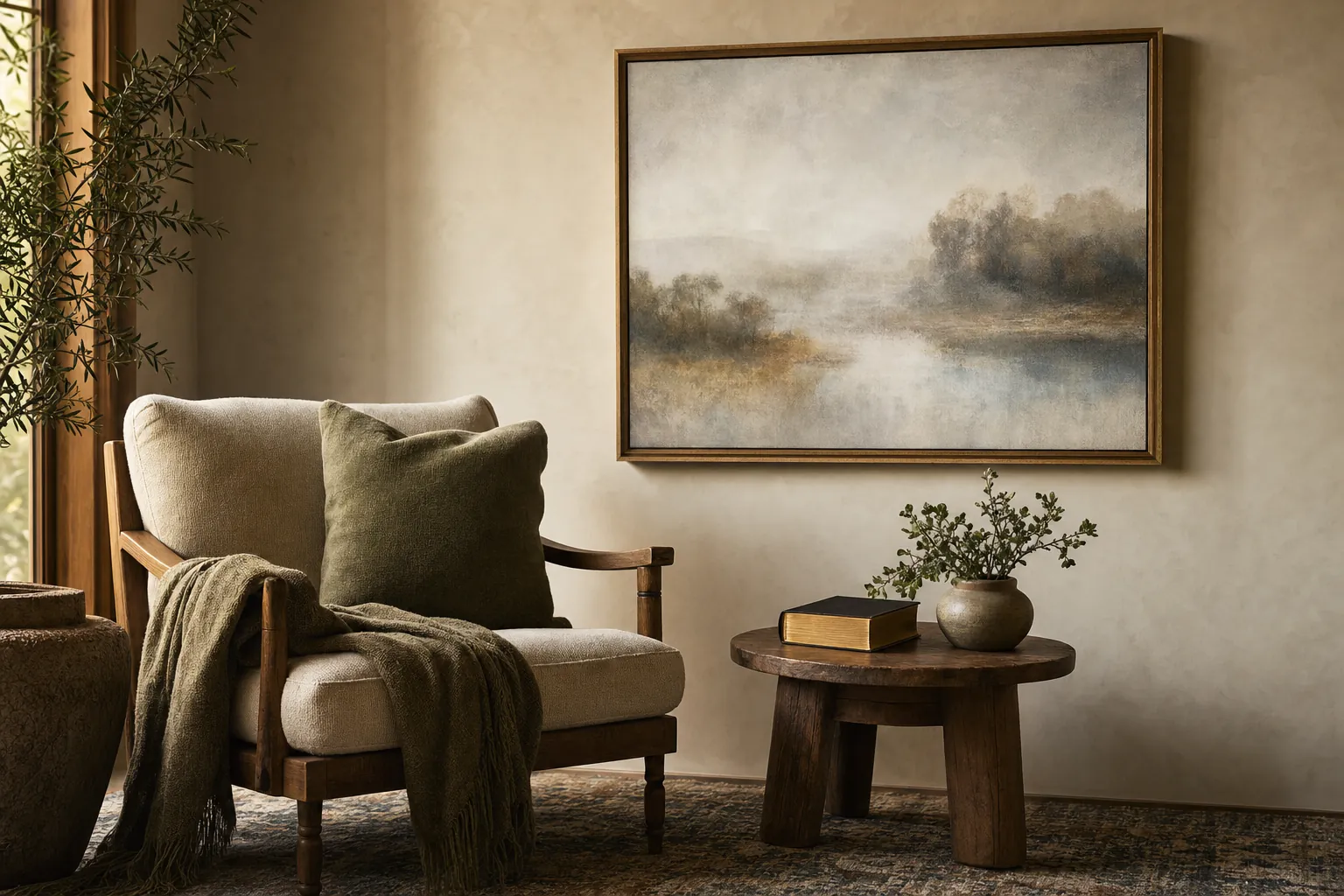
One meaningful visual can help a room remember what it is for. It might be a verse you are carrying in the current season, a piece of art that makes you feel still, or an image that reminds you of God’s care. The invitation in Psalm 46:10 to be still can be a helpful anchor when your day is loud. The aim is not decoration for its own sake. It is a visual reminder to pause.
Selah’s Scripture Art collection is created for this kind of everyday space: art that can be printed locally, framed in your own style, and placed where you need a steady word in view. A piece such as Still Waters or Light of Peace can give a quiet corner a sense of purpose without filling it with more noise.
Choose Scripture that meets you where you are, rather than what looks most impressive on a wall. You may need a reminder of peace, courage, comfort, or hope. Let the verse become a companion for a season. Read it when you sit down. Notice which words stay with you during the day. When the image or passage is familiar, it can make the corner feel less like a separate task and more like a steady part of the home.
Build a small rhythm around the space
Once the corner is ready, keep the first practice small. Five minutes is enough. Sit down, take a breath, read a few verses, and respond in your own words. You do not need the right mood or a polished prayer to begin. The encouragement to pray continually is not a demand to do more. It is an invitation to keep returning.
Try attaching prayer to a cue that already exists: after you make coffee, before you open your laptop, when the house gets quiet, or just before bed. If you miss a day, nothing is broken. Return the next day. A prayer corner is there to welcome you back, not measure your consistency.
If you are not sure how to begin, use a simple three-part rhythm. First, arrive: put both feet on the floor, take a breath, and name what is true about the moment. Second, listen: read a short passage slowly, perhaps twice, and pay attention to the word or phrase that stays with you. Third, respond: thank God, ask for help, pray for another person, or sit quietly for a moment. This is enough for a complete prayer time, even on a crowded day.
A journal can make the rhythm easier to remember. You might write the date, one thing you are grateful for, one concern you are carrying, and one name you want to pray for. You do not need to write every day, and you do not need to write well. The journal is simply a way to notice the life you are bringing before God. Over time, it can show you prayers that have changed, worries you have released, and moments of care you might otherwise have missed.
Try the corner at more than one time of day before you decide it is not working. Morning prayer may feel clear and hopeful, while evening prayer may help you release a day that would otherwise follow you into sleep. One may fit your season better than the other. The important thing is to keep the first version of the practice small enough that you can return to it. Depth usually grows from repetition, not from a dramatic beginning.
Give yourself room to begin
There is no single right way to make a prayer corner at home. The most meaningful version may be a whole room, but it may also be one chair and a small table. Begin with what you have, make it easy to return, and let the space grow naturally with your practice. You do not have to wait for a quieter house, a new piece of furniture, or a more disciplined week. Make a little room now, then meet God there as you are. Let the first version be simple. You will learn what helps when you actually use it, and that is more valuable than trying to predict every detail before you begin. A faithful corner is one you can return to.
For more ideas on shaping restful rooms, explore Selah’s spaces or use the print guide when you are ready to place a favorite piece of Scripture art at home.
Questions about prayer corners
What should be in a prayer corner?
Start with a comfortable place to sit and one surface for the items you actually use, such as a Bible, journal, or prayer list. Add only what helps you return to the space. A prayer corner does not need a long shopping list or a large budget to be meaningful.
Can a prayer corner be in a bedroom?
Yes. A bedroom chair, a small table beside the bed, or a quiet window-side spot can work well. The best location is one that is easy to use regularly and gives you a little distance from the day’s usual distractions.
How do I make a prayer corner when I have very little space?
Use what is already available: one chair, a bedside table, a basket that can be stored nearby, or a single shelf. The routine matters more than the square footage. Keeping just a few essentials together makes even a small space feel intentional.